
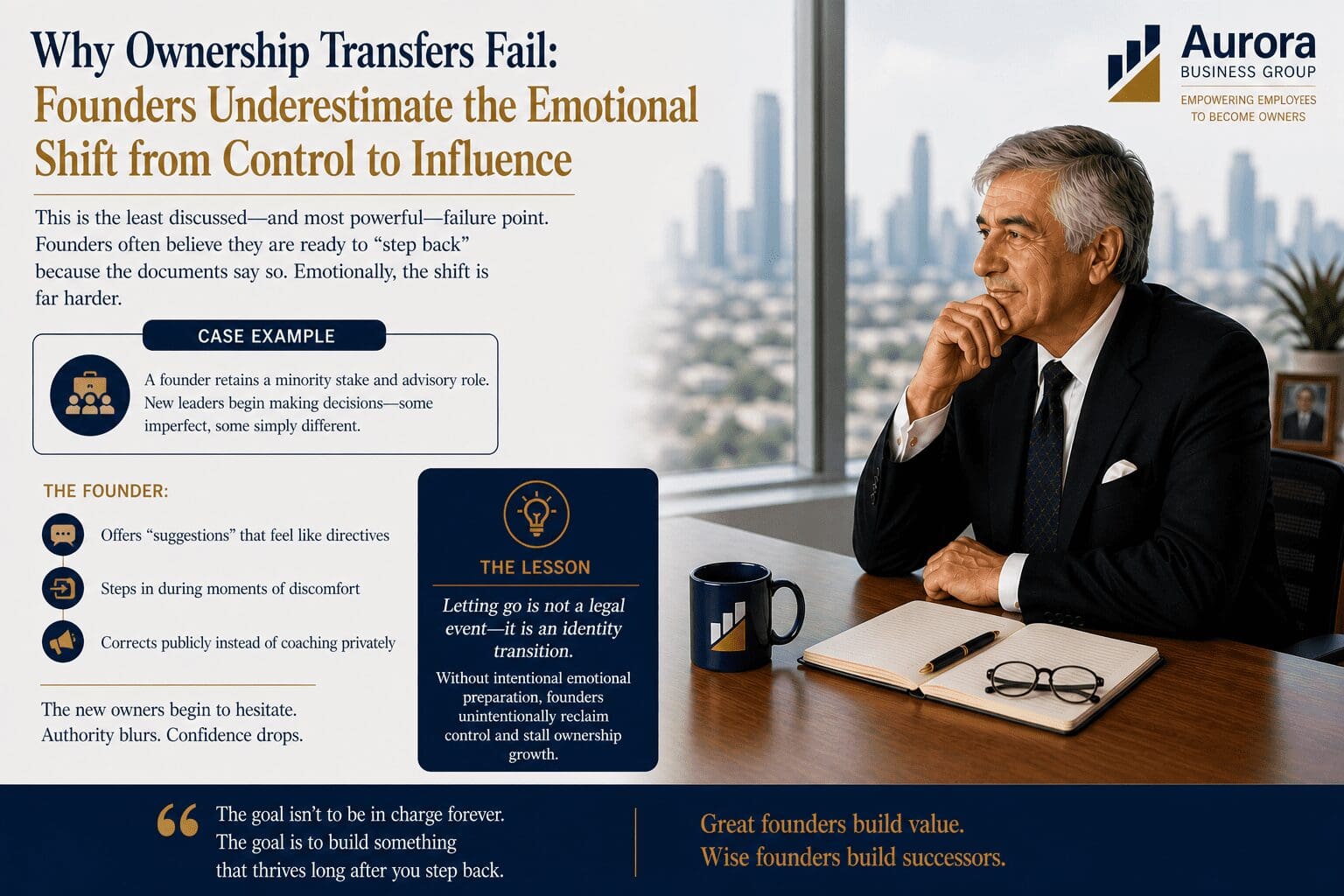
Founders Underestimate the Emotional Shift from Control to Influence
This is the least discussed—and most powerful—failure point.
Founders often believe they are ready to “step back” because the documents say so. Emotionally, the shift is far harder.
Case Example
A founder retains a minority stake and advisory role. New leaders begin making decisions—some imperfect, some simply different.
The founder:
- Offers “suggestions” that feel like directives
- Steps in during moments of discomfort
- Corrects publicly instead of coaching privately
The new owners begin to hesitate. Authority blurs. Confidence drops.
The Lesson
Letting go is not a legal event—it is an identity transition.
Without intentional emotional preparation, founders unintentionally reclaim control and stall ownership growth.
Final Thought
Ownership transitions are among the most important decisions a founder will ever make.
They should not be left to chance—or compressed into a single transaction.
They should be designed with intention, executed with discipline, and aligned with the future of the business.
That is how companies move from founder-led to owner-driven—without losing what made them valuable in the first place.