
Why SBA Lenders Require Personal Guarantees (And Why Strong Guarantors Get Deals Approved Faster)
One of the most misunderstood aspects of SBA financing is the personal guarantee.
Many prospective business buyers are surprised when they discover that obtaining an SBA loan often requires more than a strong business, a solid business plan, and an adequate down payment.
In most cases, lenders also require personal guarantees from the individuals who own and control the borrowing entity.
Understanding why personal guarantees are required and how they affect loan approval can help buyers better prepare for the financing process and avoid surprises during underwriting.
What Is a Personal Guarantee?
A personal guarantee is a legal commitment by an individual to repay a loan if the borrowing business cannot meet its obligations.
When an SBA loan is made to a corporation, LLC, or partnership, the business entity is the primary borrower. However, lenders recognize that small businesses often depend heavily on the experience, leadership, and financial resources of their owners.
A personal guarantee provides an additional layer of security by making the guarantor personally responsible for the debt if the business defaults.
Simply put:
If the business cannot repay the loan, the lender may pursue repayment from the guarantor’s personal assets, subject to applicable laws and loan agreements.
Why Do SBA Lenders Require Personal Guarantees?
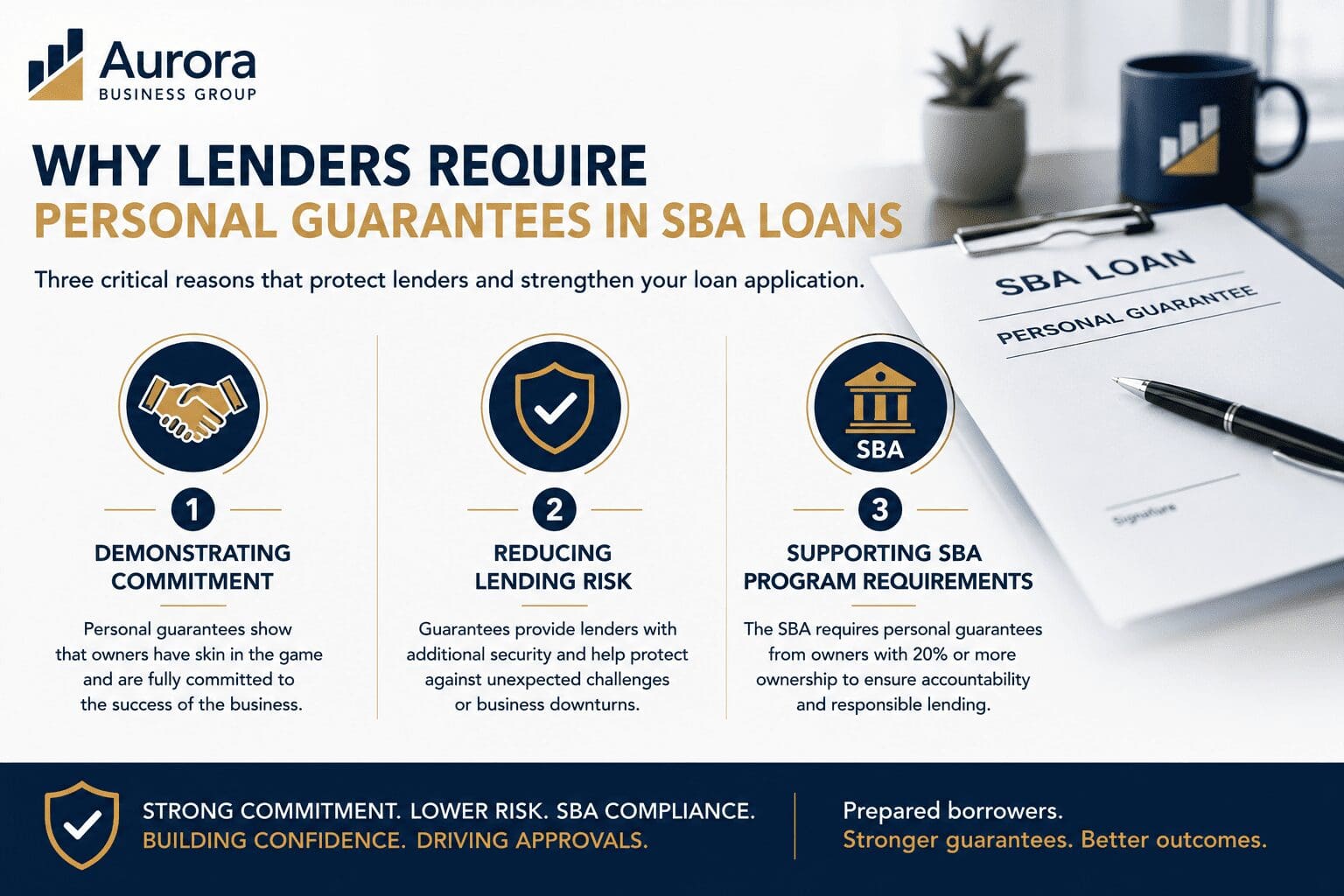
Personal guarantees serve several important purposes.
- Demonstrating Commitment
Lenders want to know that the owners have meaningful financial responsibility for the success of the business.
A personal guarantee aligns the interests of the borrower and lender by ensuring that business owners have “skin in the game.”
When owners personally stand behind the loan, lenders gain confidence that they will work diligently to protect the business and meet their financial obligations.
- Reducing Lending Risk
Business acquisitions often involve significant financing relative to the buyer’s available capital.
A personal guarantee provides lenders with an additional source of repayment if business performance deteriorates unexpectedly.
While lenders never want to enforce a guarantee, its existence reduces overall credit risk.
- Supporting SBA Program Requirements
The SBA requires lenders to obtain personal guarantees from individuals who own a significant portion of the borrowing entity.
These guarantees are a standard component of SBA loan structures and are intended to strengthen borrower accountability.
Who Must Sign a Personal Guarantee?
Under SBA guidelines, any individual owning 20% or more of the borrowing business is generally required to provide an unlimited personal guarantee.
This commonly includes:
- Majority owners
• Minority owners with 20% or greater ownership interests
• Managing members of LLCs
• Corporate shareholders meeting SBA ownership thresholds
• Acquisition partners with qualifying ownership positions
Depending on the circumstances, lenders may also require guarantees from additional individuals who play a significant management role in the business.
Ownership structures should be reviewed carefully early in the financing process to understand guarantor requirements.
What Do Lenders Evaluate in a Guarantor?
Not all guarantees are viewed equally.
Lenders assess the overall strength of each guarantor to determine the level of financial support available to the business.
Personal Financial Strength
Lenders review:
✔ Personal Financial Statements
✔ Personal Tax Returns
✔ Bank Statements
✔ Investment Accounts
✔ Real Estate Holdings
✔ Existing Debt Obligations
The objective is to evaluate net worth, liquidity, and financial capacity.
Credit History
Credit scores are important, but lenders look beyond the score itself.
They evaluate:
- Payment history
- Existing debt levels
- Bankruptcies
- Judgments
- Collection actions
- Overall credit management
Strong credit demonstrates financial discipline and reliability.
Industry and Management Experience
Experience can significantly influence lender confidence.
A guarantor with substantial management experience, industry knowledge, and a proven operating track record may strengthen an application even when the acquisition represents a significant financial commitment.
Lenders frequently ask:
“Has this individual successfully managed a business before?”
The answer can meaningfully affect underwriting decisions.
How Guarantor Strength Impacts Loan Approval
Many buyers focus exclusively on the target company’s financial performance.
However, SBA lenders evaluate three critical components simultaneously:
The Business
Historical financial performance, profitability, and cash flow.
The Transaction
Purchase price, equity injection, and acquisition structure.
The Guarantor
Financial strength, experience, credit quality, and repayment capacity.
Strong guarantors often help lenders become more comfortable with:
- Larger loan amounts
- Higher leverage transactions
- Industry transitions
- Business growth plans
- Management succession situations
Conversely, weak guarantor profiles may trigger additional underwriting requirements, increased scrutiny, or requests for additional collateral.
Common Misconceptions About Personal Guarantees
“The Business Is Profitable, So a Guarantee Shouldn’t Be Necessary.”
Even highly profitable businesses can experience unexpected challenges. Personal guarantees help protect lenders against unforeseen risks.
“Only the Majority Owner Has to Sign.”
In most SBA transactions, all owners holding 20% or more ownership are required to provide guarantees.
“A Personal Guarantee Means the Lender Expects Failure.”
Not at all.
Personal guarantees are standard risk management tools and are routinely required even for highly qualified borrowers and strong businesses.
Preparing for Success
The strongest SBA borrowers prepare their guarantor documentation early in the process.
This typically includes:
✔ Personal Financial Statements
✔ Tax Returns
✔ Bank Statements
✔ Resume and Experience Summary
✔ Schedule of Personal Debts
✔ Ownership Documentation
Well-organized guarantor information demonstrates professionalism, reduces underwriting delays, and increases lender confidence.
Final Thoughts
Personal guarantees are an essential component of SBA lending.
They provide lenders with additional security, demonstrate borrower commitment, and play a meaningful role in loan approval decisions.
For buyers pursuing a business acquisition, understanding guarantor requirements early can help streamline the financing process and improve the likelihood of a successful closing.
At Aurora Business Group, we help buyers prepare lender-ready acquisition packages, navigate SBA financing requirements, and position transactions for successful approvals and closings.
Strong businesses matter.
Strong financials matter.
But strong guarantors often make the difference between a delayed transaction and a successful acquisition.